

Royal Air Force Syerston, commonly known simply as RAF Syerston (ICAO: EGXY), is a Royal Air Force station in the parish of Flintham, near Newark, Nottinghamshire. Opened in 1940, it was used by the Royal Air Force as a bomber base during the Second World War, operating Vickers Wellingtons, Avro Manchesters, and the Avro Lancaster heavy bombers. Post-war, it became home to Jet Provosts of 2 Flying Training School. It is now home to the Royal Air Force Central Gliding School.
Syerston was built as part of the bomber expansion in the late 1930s, but did not open until 1 December 1940. The first aircraft were Wellingtons crewed by Polish flyers who had joined the RAF. In July 1941, they were replaced by members of the Royal Canadian Air Force (RCAF), flying Handley-Page Hampdens.
From December 1941 until 5 May 1942, the base was closed whilst a concrete runway was built with two T2 hangars. When it re-opened, it became part of 5 Group. In 1942, several squadrons of Lancasters arrived. 61 Conversion Flight between May and August 1942 with Manchesters and Lancasters and 408 Conversion Flight between May and June 1942 used the airfield supporting their respective squadrons. The airfield was used as a Relief Landing Ground for 16 (Polish) SFTS during Winter 1942/43.
In March 1943, Wing Commander Guy Gibson was commanding officer of 106 Sqn at Syerston, before he was given the task of forming 617 Sqn – The Dambusters, at RAF Coningsby.
On 3/4 November 1943, (Acting) Flight Lieutenant Bill Reid of 61 Squadron was awarded a Victoria Cross on an operation to Dusseldorf flown from Syerston.
On 17 November 1943, the operational squadrons departed, and the station was used for bomber crew training, led by Captain Robert White. 1668 Heavy Conversion Unit joined on 17 November 1943 and became 5 Lancaster Finishing School four days later. 1485 (Bombing) Gunnery Flight between November 1943 and February 1944.
Between November 1943 to July 1944, there was also 1690 (Bomber) Defence Training Flight in attendance with several Wellingtons, Spitfires, Hurricanes, plus a few Martinet tug aircraft; all employed in brushing up the skills of air gunners on air-to-air exercises.
The LFS left on 1 April 1945, with 49 Squadron arriving from RAF Fulbeck later in the month who only had one operation before leaving to RAF Mepal in September. Bomber Command Film Flight Unit between April and October 1945 used the airfield. (Wikipedia)
- Names on this memorial
- Location
- Photographs
- CF Abraham
- RM Agnew
- J Aleo
- RE Archibald
- AW Armstrong
- AT Baber
- KD Babington-Browne
- GWF Baker
- WE Baker
- GLC Beattie
- F Bestwick
- OP Beswick
- S Bialek
- RH Bird
- RF Bird
- HSF Bishell
- PFB Bluett
- JE Bonson
- DG Bradley
- SE Bradshaw
- A Briggs
- Bernard Broe
- D Brown
- AL Brown
- PJV Browne
- A Burak
- A Burson
- HF Burton
- JJ Cadd
- WF Cairns
- JA Caldwell
- E Carr
- HM Champion
- S Chappell
- JH Charles
- EB Clampitt
- RE Clark
- Albert Dennis Clark
- J Coaker
- RE Cooke
- JF Cooper
- JRAR Coulombe
- KO Court
- GH Cowles
- R Crawley
- LW Cronk
- DM Crozier
- DJ Curtin
- JA Cymborski
- MJ Czerniejewski
- CF Daley
- FL Darlington
- J Davis
- JCE Dellar
- MH Denison
- DHA Dewar
- JP Dorman
- M Dransfield
- J Drozdz
- JR Dryden
- SF Duchnicki
- A Dunbar
- GR Dunlop
- BJ Eckett
- FJ Edwards
- KH Ellis
- JA Emerson
- AJ Evans
- JT Fallon
- RG Fawkes
- JF Fitzgibbon
- PJ Folker
- D Forbes
- JB Frost
- RC Gait
- PW Garnham
- SR Gear
- CA Giles
- DS Gillett
- G Glassbrook
- WM Graham
- GE Green
- RS Greep
- PW Gregory
- FL Grimwood
- LG Gunning
- BJ Gunter
- Z Gwozdz
- AF Haden
- RK Hall
- L Hampel
- FJL Hanson
- EA Harry
- NR Hartley
- E Hartley
- RHW Hatt
- VC Hayward
- EL Hayward
- EF Healey
- W Henry
- PJ Hill
- JB Hillhouse
- GA Hitchin
- AE Holland
- JB Hood
- LG Hudson
- JT Hunt
- GJ Inglis
- VE Jack
- J Janota-Bzowski
- W Januszkiewicz
- NB Johnson
- J Jonczyk
- CG Jones
- KV Jones
- JC Jones
- PCV Joslin
- CN Judd
- CH Jurgensen
- C Kaczalski
- L Karcz
- RJ Kee
- WH Keeble
- FC Kelly
- L Kenney
- KM Kielich
- JH Kinch
- J Kirby
- B Klatt
- S Kowalcze
- J Krawczyk
- B Kuszczynski
- B Kuzian
- LA Leadbitter
- AF Lear
- J Lee
- KR Lees
- HD Lewis
- ZS Lewoniec
- W Lichota
- SH Lincoln
- AZ Lisinski
- K Loach
- D Lorimer
- EJ Loverock
- WG Ludbrook
- MH Lumley
- GJ Lynes
- HM MacKenzie
- RB MacWilliam
- WJ Malak
- EH Mantle
- DV Markall
- ER Markland
- GB Marsh
- HE Marshall
- J Martin
- EJ May
- WD McCulloch
- H McCullough
- AL McDonald
- PM McGrath
- AM McKelvie
- JD McKeown
- AT McMillan
- IGA McNaughton
- F McNeil
- JA McPhee
- A Mercer
- James Graham Middlemas
- T Miller
- G Mitchell
- SA Mitowski
- KL Morgan
- JC 'Jack' Morgan
- K Mruk
- JD Murray
- PRV Myers
- TR Newton
- WR Newton
- Derek Nicholls
- Archibald Thomas Noble
- JE Northend
- DFW Norton
- GEP O'Connor
- BP Okonski
- J Ostrowski
- RCC Owen
- AC Palmer
- AR Parker
- ED Parker
- CM Parker
- WW Parkinson
- E Parry
- EE Patchett
- JD Patey
- DW Penney
- JR Pennington
- MA Phair
- WJ Picken
- S Pisarski
- J Podziemski
- GJ Powell
- GR Powell
- IF Pratt
- RJ Preece
- GV Pryor
- JE Quinn
- PA Ragg
- RB Rathbone
- PN Reed
- CH Reed
- GW Reid
- JH Reid
- F Richards
- TJ Ridd
- H Rigby
- E Roberts
- EBTM Robertson
- H Rogowski
- JJ Rooney
- MJ Ryszkiewicz
- RS Sabell
- GB Sanderson
- RH Sedgley
- ER Seibold
- R Shaw
- RW Shearon
- HF Sikorski
- W Simons
- JW Simpson
- REJ Sisley
- PJ Smith
- F Sobieralski
- MW Socharski
- AR Spencer
- BF Stachon
- RA Stansfield
- RL Staples
- T Stefanicki
- J Sylwestrowicz
- A Sym
- WG Tagg
- JL Tarran
- AW Thomas
- HJR Tickle
- FA Titcomb
- S Tofin
- J Tomaszewski
- WL Towers
- JB Underwood
- A Urquhart
- B Usher
- RR Walker
- JL Wallis
- FLD Walters
- TH Warne
- JS Waroczewski
- RG Watson
- RCH Webb
- FSW Webb
- RE Wesley
- JM Whitehead
- C Wieczorek
- HL Williams
- RG Williams
- E Williams
- A Williamson
- JC Wilson
- JFL Wilson
- RJF Windsor
- S Witczak
- J Wojtowicz
- JD Wright
- JHB Wright
- Dennis Wright
- R Wrightson
- GE Young
- GA Young
- JO Young
- KRJ Youngs
- RC Zavitz
- K Zerbecki
- A Zirkwitz
- WJ Zolonowski
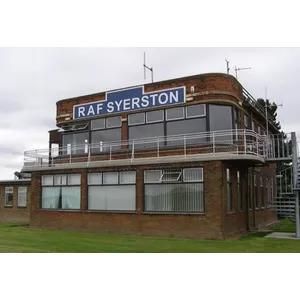 Photo of zedstone