


Arthur Ferdinand Green
A. F. Green was educated at Newark's Magnus School and University College Nottingham.
Before enlisting, he had been for eight years a teacher at Chandos Street school, Netherfield.
- Family History
- Military history
- Extra information
- Photographs
He was the son of Arthur and Lily Green. He was married to Joan Cora Alfreda Lily Green and they lived at 29, Fernleigh Avenue, Mapperley, Nottingham. They had married in the spring of 1944 and possibly had a son John A C Green in late 1944. Joan later moved to Denham, Buckinghamshire and in 1948 she married Patrick Blower. She died in 2011.
Arthur left Joan £842 8s 1d in his will, she was living at 29 Fernleigh Avenue, Westdale Lane, Mapperley, Nottingham.
Belgium SCHOONSELHOF CEMETERY V. D. 77.
Arthur Ferdinand Green died of wounds sustained during a V2 attack on the Rex Cinema in Antwerp.
Antwerp had been liberated in September 1944 and became a major transit hub for Allied forces and a supply hub. The 16th December was the date the German Army launched their Ardennes Offensive. A main target of the offensive was the retaking of Antwerp and it's port, to cut the Allies's supply chain and to split the Allied forces. From October 1944 to March 1945 thousands of V1 and V2 rockets were launched with the aim to demoralise the population and disrupt the Allied forces, but the V2 attack on the cinema caused the highest death toll.
On 16 December 1944 (the first day of the Ardennes Offensive), at 15:20, a V2 rocket fired from The Netherlands (Hellendoorn) by the SS Werfer Battery 500 directly landed on the roof of the Rex cinema in Antwerp during a showing of The Plainsman (starring Gary Cooper). There were approximately 1,100 people inside the cinema and the explosion killed 567 including 296 Allied servicemen (194 further servicemen were injured) and 11 buildings in total destroyed. Up to 74 Belgian children were also killed.
It took nearly a week to dig all the bodies out of the rubble. It was the single highest death total from a single rocket attack during the war. Following the attack all public performance venues were closed and the town council ordered that a maximum of 50 people were allowed to congregate in any one location.
The theatre was re-built in 1947 but closed in 1993 and was demolished in 1995. (Wikipedia)
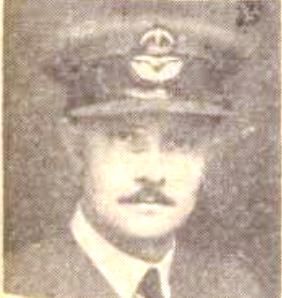 Arthur Ferdinand Green
Nottingham Evening Post 29/12/1944
Arthur Ferdinand Green
Nottingham Evening Post 29/12/1944
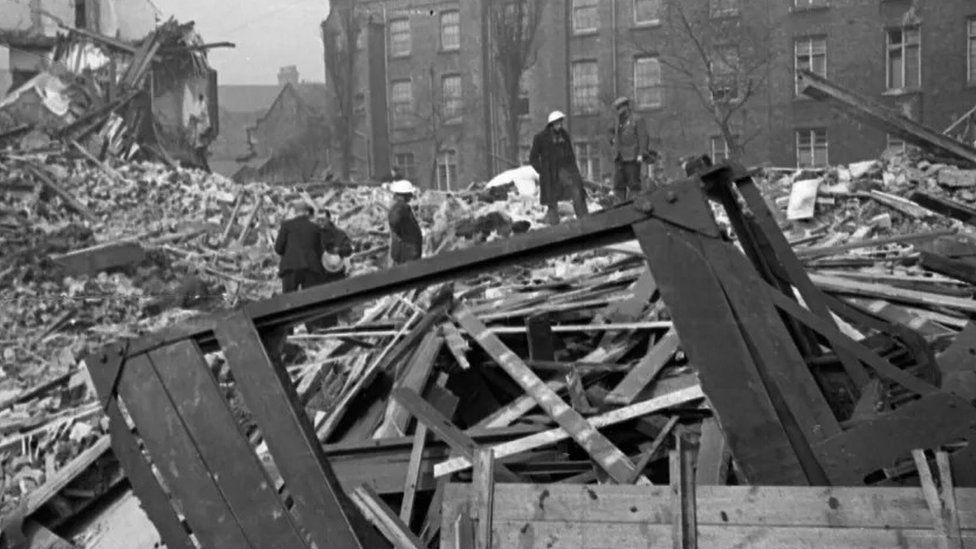 After the V2 bombing of the Rex cinema at Antwerp.
Photo: Public domain
After the V2 bombing of the Rex cinema at Antwerp.
Photo: Public domain
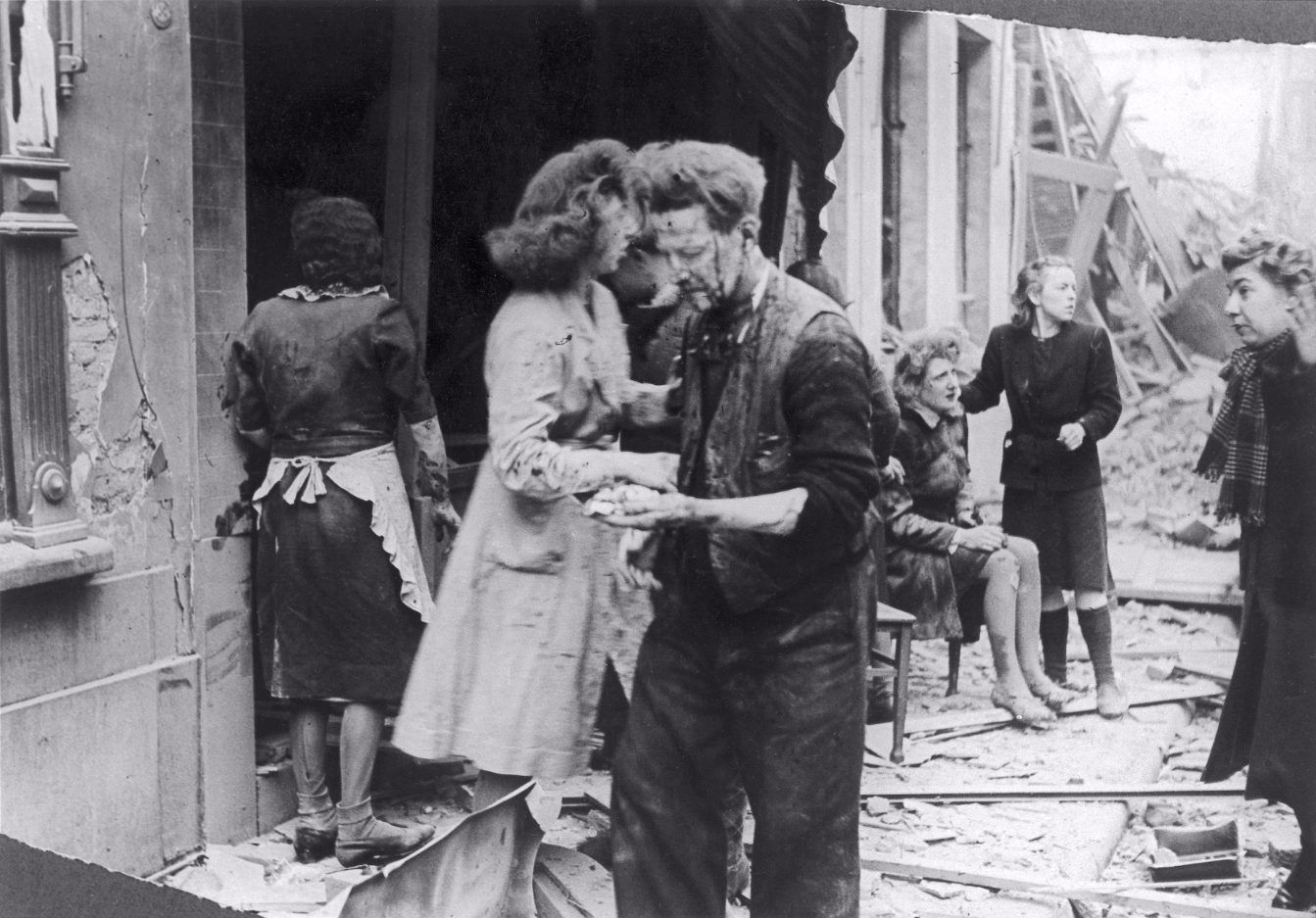 Shocked survivors of the V2 attack on Antwerp's Rex cinema.
Photo: Public domain
Shocked survivors of the V2 attack on Antwerp's Rex cinema.
Photo: Public domain