


George Smith
He was a coal carter in 1901 and a railway carriage cleaner in 1911.
- Family History
- Military history
- Extra information
- Photographs
George Smith was born at 20 Kyte Street, Lenton, Nottingham the son of Harry and Elizabeth (neé Dowsing) Smith and the brother of Rose, Samuel, John, James and Florence Smith. In 1891 and 1901, they lived at 26, Pelican Street, Denman Street, Radford, Nottingham. Subsequently, according to George's marriage certificate, they moved to 20, Park Road, Lenton, Nottingham.
George married Elizabeth Clarke (b.1880) in 1909 at Lenton Parish Church, Nottingham. One of the witnesses was Elizabeth's brother Frank Clarke. They first lived at 39, Hutton Street, Colwick Road, Sneinton, Nottingham. George and Elizabeth were to have three children - Irene b.1910, Harold b.1914 and Harry George b.1916.
By the 1911 Census, they had moved to 36, Queen's Grove, Queen's Bridge Road, Nottingham and were listed as George Smith (29) a railway carriage cleaner, his wife Elizabeth (30) and their daughter Irene 3 months of age. Also living with them was George's brother in law Frank Clarke (34) a railway carriage cleaner.
Following George's death, with effect from 22/10/1917, Elizabeth was awarded a weekly pension of 26/3d.
Thanks to George Smith's granddaughter Joyce Smith for her help compiling this record.
Additional family research and information Peter Gillings
He was buried at Aveluy Wood Cemetery (Lancashire Dump) Mesnil-Martinsart, France.
Smith was killed during intense, ferocious, hand to hand trench fighting on 4th March 1917. This occurred as the 1st Battalion was heavily engaged in the Somme sector near Bouchavesnes and Neuville-Saint-Vaast, directly confronting the early phases of the German strategic withdrawal to the Hindenburg Line.
From 1st Battalion Sherwood Foresters war diary (TNA WO/95/1721/3) and the CWGC Debt of Honour Register it emerges that George Smith was one of 41 men from the unit to lose their lives on March 4th 1917 with individual soldiers displaying great courage, intiative and resilience throughout a very difficult and costly day.
'By 6.15 am all the objectives had been taken and held,' recorded the diary... During the day the enemy made four local counter attacks but in each case never succeeeded in penetrating our line.'
Unknown
 Photo of George Smith
smith_george grave at Aveluy Wood Cemetery, courtesy of the Sherwood Foresters Regiment roll of honour
Photo of George Smith
smith_george grave at Aveluy Wood Cemetery, courtesy of the Sherwood Foresters Regiment roll of honour
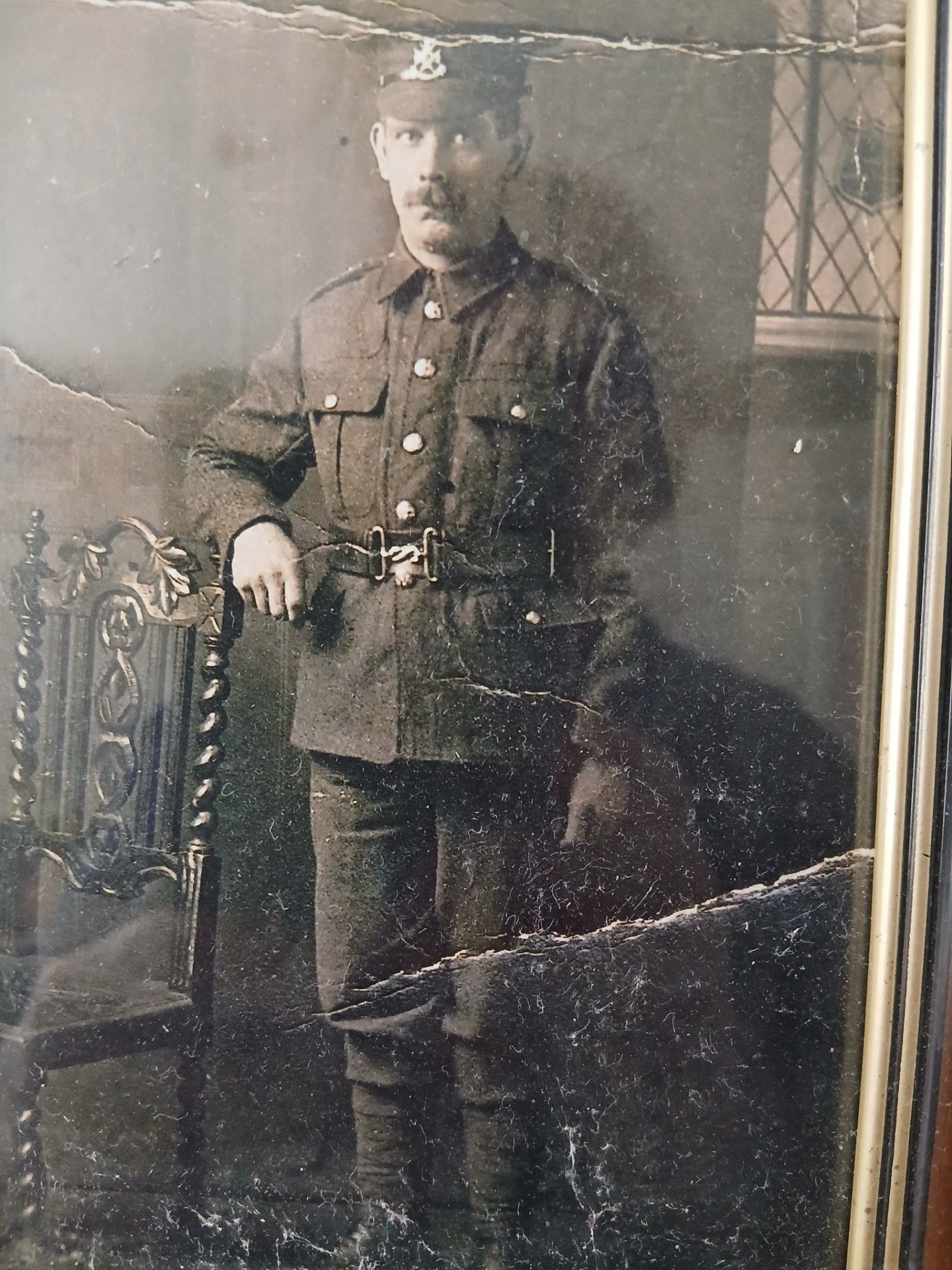 Photo of George Smith
Courtesy of George Smith's granddaughter Joyce Smith
Photo of George Smith
Courtesy of George Smith's granddaughter Joyce Smith