


John Aleth Rhys Roberts
- Family History
- Military history
- Extra information
- Photographs
Son of Aleth Edward and Annie Veronica Roberts.
PLYMOUTH NAVAL MEMORIAL Panel 42, Column 2.
HMS Glorious was the second of the three Courageous-class battle cruisers built for the Royal Navy during the First World War. Glorious was completed in late 1916 and spent the war patrolling the North Sea. She participated in the Second Battle of Heligoland Bight in November 1917 and was present when the German High Seas Fleet surrendered a year later. Glorious was paid off after the war, but was rebuilt as an aircraft carrier during the late 1920s. After re-commissioning in 1930, she spent most of her career operating in the Mediterranean Sea. After the start of the Second World War, Glorious spent the rest of the year unsuccessfully hunting for the commerce-raiding German cruiser Admiral Graf Spee in the Indian Ocean before returning to the Mediterranean. She was recalled home in April 1940 to support operations in Norway.
Late in the afternoon of June 8th, the Royal Navy suffered one of its most devastating defeats of the Second World War. HMS Glorious was sunk by German battleships Scharnhorst and Gneisenau along with her escorting destroyers HMS Ardent and HMS Acasta. The three British warships were taking part in Operation Alphabet, the evacuation of Allied forces and aircraft from Norway that had been taking place simultaneously with the better known and remembered evacuation at Dunkirk.
The death toll of 1,519 exceeded any other British naval disasters of the war. Among the dead were Glorious' Captain, Guy D'Oyly-Hughes, a highly decorated First World War submariner, and five Nottinghamshire men – Ordinary Seaman Fred Corps from Bulwell, Air Mechanic 2 Jack Grimmer from Mansfield, Telegraphist Cyril Mewse from Nottingham, Chief Petty Officer John Roberts and Stoker 1 George Robinson from Nottingham. One of the Royal Navy's precious few large aircraft carriers had been sunk, along with two destroyers and, with the Battle of Britain in the offing, two RAF fighter squadrons. (Wikipedia & History Today 8/6/1915)
Official documents relating to the tragedy will remain classified until 2041.
The Ambush in the Norwegian Sea
• Independent Sailing: HMS Glorious detached from her main convoy to head back to Scapa Flow independently, reportedly citing low fuel
• Complete Unreadiness: Despite navigating dangerous waters in broad daylight, the carrier was sailing with one-third of her boilers shut down. No lookout was posted in the crow's nest, and no aerial reconnaissance patrol was in the sky.
• The Attack: The German battleships spotted the carrier at 15:45. Scharnhorst scored a direct hit on the flight deck from 24 kilometers away, destroying the hangar and preventing any British aircraft from launching.
• Gallant Escorts: The destroyers Ardent and Acasta laid smoke screens and launched desperate torpedo attacks, severely damaging Scharnhorst before both were sun
•
The Core Controversies
The disaster shocked the British public and led to decades of debate, culminating in a 100-year official secrecy act placed on the inquiry records until 2041.
The Court-Martial Dispute: Historians note that the carrier's commanding officer, Captain Guy D'Oyly-Hughes, was in a rush to return to port to attend a court-martial against his own senior aviator, Commander J.B. Heath, who had refused to fly what he deemed suicidal missions. This personal dispute is believed to have driven the captain's erratic behaviour
• The Radio Silence: As the ships went down, a weak distress signal was sent. The cruiser HMS Devonshire—which was secretly carrying the Norwegian Royal Family and Norway's gold reserves—reportedly received the signal but maintained strict radio silence to protect its high-value cargo, leaving survivors in the freezing water for days.
The primary files regarding the Board of Enquiry into the sinking of HMS Glorious remain under a strict 100-year secrecy order, meaning they will not be fully declassified until January 2041.
However, over recent decades, a slow trickle of related naval intelligence, decoded signals, and personal logs have been released at The National Archives or surfaced through independent historical research. These findings have deeply undermined the original 1940 official narrative.
- The "Fuel Shortage" Alibi Disproven
• The Original Claim: The Admiralty initially stated that HMS Glorious left the safety of the main evacuation convoy because she was dangerously low on fuel and needed to return to port immediately.
• What Files Show: Declassified fuel logs and carrier group signals strongly suggest the ship had plenty of fuel. Instead, documents support the theory that Captain D'Oyly-Hughes rushed back independently specifically to fast-track the court-martial of his senior aviator, Commander J.B. Heath, whom he had left behind in the Orkneys. [ - The Ignored Intelligence Warnings
• The Original Claim: The encounter with the German battleships Scharnhorst and Gneisenau was treated as a completely unpredictable, chance meeting.
• What Files Show: Bletchley Park intercepted German naval signals indicating that major surface vessels were breaking out into the North Sea (Operation Juno). This critical intelligence was never forwarded to HMS Glorious by the Admiralty, leaving the unready carrier completely blind to the threat. - The Mystery of the Unsanctioned Notes
• The "LeGeyt Note": Decades after the sinking, an unsanctioned note was discovered placed inside sealed archives by Commander LeGeyt of the escort ship HMS Diana. The note details direct communications between the carrier Ark Royal and Glorious, further validating that the rush home was driven by the internal command feud rather than operational necessity. - The HMS Devonshire Controversy
• The Original Claim: No nearby Allied ships received the carrier's desperate, garbled distress transmission before she sank.
• What Files Show: The cruiser HMS Devonshire was close enough to receive the transmission. However, because she was on a highly sensitive mission evacuating the Norwegian Royal Family and the nation's gold reserves, strict radio silence was maintained. Her commander chose not to break formation or fire back a receipt, leaving survivors to float in freezing waters for three days before rescue. - Connection to "Operation Paul"
• Churchill's Cover-up: Some independent historians referencing cross-referenced logs argue that the extreme 100-year sealing of the documents was designed to protect Winston Churchill and the First Sea Lord. The carrier may have been involved in a highly classified, aborted plan to mine neutral Norwegian waters—known as Operation Paul—which the government wanted entirely buried from the public record.
Captain Guy D’Oyly-Hughes (1891–1940) was a highly decorated, headstrong, and controversial Royal Navy officer. While celebrated as an eccentric First World War hero, his rigid leadership style and operational blunders during World War II directly contributed to the tragic loss of HMS Glorious.
The First World War Legend
D’Oyly-Hughes built a reputation for extraordinary personal bravery as a submariner during the Dardanelles Campaign in 1915:
• The Commando Raid: Serving as second-in-command on the submarine HMS E11, he famously constructed a makeshift raft to haul guncotton explosives ashore.
• Sabotage: He swam a mile to the Turkish coast, single-handedly blew up a section of the strategically vital Constantinople–Baghdad Railway, and safely swam back to his submarine.
•
• Decorations: For his wartime exploits, he was awarded the Distinguished Service Cross (DSC) and the Distinguished Service Order (DSO) with a later Bar.
Flaws as a Carrier Commander
In June 1939, D’Oyly-Hughes was given command of the aircraft carrier HMS Glorious. However, his background was strictly in submarines, and he struggled to adapt to naval aviation:
• Disregard for Experts: Though he learned to fly light aircraft, he repeatedly dismissed the technical advice of his seasoned Fleet Air Arm pilots.
•
• Erratic Behavior: He was known to keep a loaded revolver on the bridge for "any man who failed in his duty," alongside a pet Chihuahua and a canary in his cabin. His own wife famously wrote a letter to a senior officer pleading, "Please be forbearing with Guy won't you, for sometimes he says and does things which seem quite mad."
The Clash with Commander Heath
The fatal catalyst for the ship's demise was a bitter command feud between D'Oyly-Hughes and his senior aviator, Commander J.B. Heath
During the Norway campaign, D'Oyly-Hughes ordered a series of air strikes against inland target zones.
• Commander Heath refused the order, arguing that launching slow, unescorted biplanes (Fairey Swordfish) without clear targets into heavy land-based flak was a suicidal misuse of aircraft. [Viewing this as borderline mutiny, an infuriated D'Oyly-Hughes stripped Heath of his position and dropped him off at Scapa Flow to await a formal court-martial.
• Fatal Decisions on June 8, 1940
Driven by a desire to rush back to the UK to personally prosecute Heath's court-martial, D'Oyly-Hughes secured permission to break away from the protection of the main allied convoy. His fixation on the internal dispute resulted in a complete breakdown of basic naval protocol
He sailed into heavily contested waters with one-third of the carrier's boilers shut down to save fuel, reducing her maximum escape speed.
• He ordered zero lookouts to the crow's nest.
• He refused to launch a standard, continuous Combat Air Patrol (CAP), leaving the carrier completely blind to the approaching German battleships.
• D’Oyly-Hughes went down with HMS Glorious during the ambush. His actions remain the subject of fierce historical debate over whether his behavior was driven by overwhelming arrogance, an obsession with military discipline, or a secret operational directive from London.
The actions of the escort destroyers HMS Ardent and HMS Acasta on June 8, 1940, stand as one of the most gallant and desperate rearguard defences in naval history.
Outgunned and facing two of Germany's most powerful battleships (Scharnhorst and Gneisenau), the two standard A-class destroyers deliberately charged the enemy. Their objective was to buy time for the defenceless aircraft carrier HMS Glorious by weaving smokescreens and launching direct torpedo attacks
HMS Ardent: The First to Charge
Commanded by Lieutenant Commander John F. Barker, HMS Ardent was sent ahead to identify the strange silhouettes on the horizon at 16:00. Once identified as hostile battleships, Ardent immediately began laying a dense smoke screen to conceal the carrier while firing her 4.7-inch guns
The Attack: Knowing her small guns could not pierce the heavy German armor, Ardent closed the distance to launch a four-tube torpedo salvo
The Sinking: Caught in the devastating crossfire of the battleships' secondary 5.9-inch batteries, Ardent was struck repeatedly. Her forward boiler room exploded, crippling her speed.
At 17:28, listing heavily and completely overwhelmed by shellfire, HMS Ardent capsized and sank. Of her crew, only one man survived the subsequent days in the freezing water. [1, 2]
HMS Acasta: The Last Stand
With Ardent destroyed and Glorious fatally listing and burning, HMS Acasta, commanded by Commander Charles E. Glasfurd, was left entirely alone. Rather than attempting to use her 35-knot speed to flee, Glasfurd famously signalled his crew that they would go down fighting to avenge their sister ships.
The Defiant Counter-Attack: Emerging from the remnants of the smoke screen, Acasta went into a full-speed, suicidal charge directly toward the German line
The Sting: Acasta fired a desperate four-tube torpedo salvo. At 18:08, one of her torpedoes struck the Scharnhorst directly beneath her aft 11-inch gun turret. The massive blast killed 48 German sailors, flooded the engine rooms, and severely crippled the battleship's speed.
The End: Seconds later, a final, overwhelming salvo from Gneisenau tore the destroyer apart. Acasta sank at 18:20. Out of 161 men on board, Leading Seaman Cyril "Nick" Carter was the sole survivor.
Strategic Impact of Their Sacrifice
Though both destroyers were obliterated, their final defence radically altered the campaign:
Saving the Evacuation Fleets: The severe damage inflicted on Scharnhorst by Acasta's lone torpedo forced the German fleet commander to abort the entire operation (Operation Juno).
Retreat to Safety: Terrified of further submarine or destroyer ambushes with a crippled capital ship, the Germans immediately retreated to port in Trondheim for emergency repairs, entirely ignoring the undefended troop convoys packed with thousands of Allied soldiers evacuating nearby Narvik.
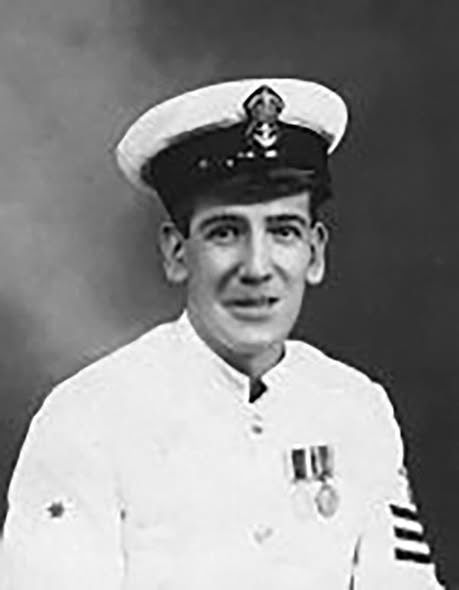 Photo of John Aleth Rhys Roberts
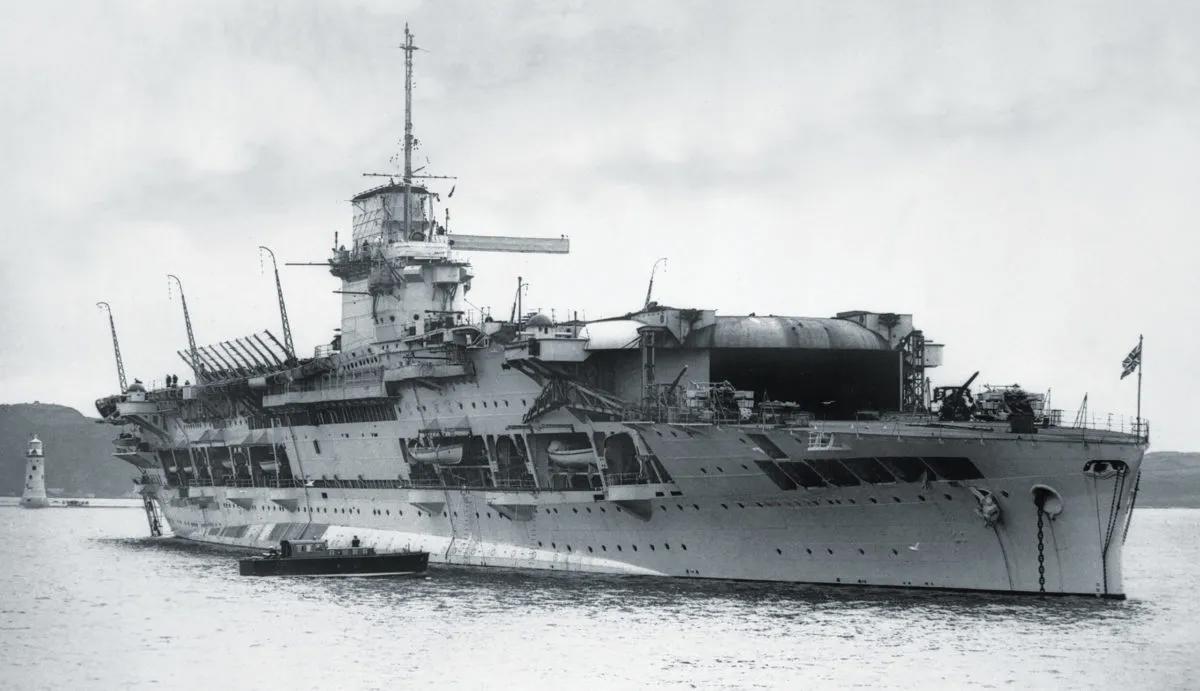 HMS Glorious