


Lawrence Eric Billings
- Family History
- Military history
- Extra information
- Photographs
He was the son of John Lawrence Billings and Kate Adeline Billings of 8,Young Street, St Ann's, Nottingham. Lawrence Billings and Joyce Ash were married at Nottingham. 5/3/1942.
Paul Markham notes ‘Although listed as an Observer, Lawrence was an Air Bomber. His Course No.37 at 19 OTU was the first in which the Navigator and Air Bomber Trades were separate’.
Halifax II W7767 took off 0115 7 Sept 1942 from Melbourne, East Yorkshire to bomb Duisburg. It was part of a 207 aircraft attack (6 types) 8 aircraft - 5 Wellingtons, 2 Halifaxes, 1 Striling were lost (3.9% of the attacking force).
Cloud and haze were present and bombing was not concentrated. However, Duisburg reported its heaviest raid thus far with 114 buildings destroyed and 316 seriously damaged. 86 civilians were killed.
Halifax II W7767 failed to return. Cause of loss and crash-site not established. No survivors. Fatalities: Pilot Officer D W E Morgan, Sergeant A M Milne, Sergeant L E Billings, Sergeant A Morris, Sergeant A J Henry (RAAF), Sergeant H J Loveday, Sergeant J Rice.
Billings flew the thousand bomber raid on Bremen at the conclusion of his training at 19 OTU with Morgan, Milne, Morris and Loveday of the 10 Squadron crew who were to share his fate attacking Duisburg a few weeks later. In the circumstances, they were perhaps fortunate to survive the Bremen operation.
The RAF mounted its third "thousand-bomber" raid on Bremen on 25–26 June 1942 (Operation Millennium II), using 1,067 aircraft to attack the German port and submarine yards. While smaller than the Cologne raid, it was a massive, high-risk effort that caused extensive damage, hitting shipyards and residential areas.
The force consisted of 472 Wellingtons, 124 Halifaxes, 96 Lancasters, 69 Stirlings, 51 Blenheims, 50 Hampdens, 50 Whitleys, 24 Bostons, 20 Manchesters and 4 Mosquitoes. As Middlebrook and Everitt put it ‘Bomber Command never before or after dispatched such a mixed force.’ (Bomber Command War Diaries p. 280)
After Churchill intervened and insisted, the Admiralty allowed a futher 102 Hudsons and Wellingtons of Coastal Command to join the force. 5 further aircraft provided by Army Co-operation Command made this a truly cross-forces operation.
The primary targets were the U-boat construction yards (including the Deschimag yards) and industrial areas of the city. Similar to the Cologne raid, this utilized a concentrated, short-duration attack to overwhelm anti-aircraft defences. The raid caused widespread damage, though cloudy weather led to scattered bombing. A major success was the devastation of U-boat production facilities, forcing Hitler to divert resources to home defence.
48 Bomber Command aircraft (5% of those dispatched) were lost on this raid including 4 which went down in the sea near England and from which all but 2 crewmen were rescued.
5 of the 102 Coastal Command aircraft were also loat.
The heaviest casualties were suffered by the OTUs of 91 Group which lost 23 of 198 Whitleys and Wellingtons dispatched by that group (11.6%).
Middlebrook and Everitt speculated that ‘the relevant reasons for this may be the fact that OTUs were usually equipped with old aircraft retired from front line squadrons, that the Bremen raid involved a round trip 200 miles longer than the Cologne and Essen raids and that the extra time taken up in searching for the target in cloudy conditions that night. The trainee crews of 91 Group suffered accordingly.’
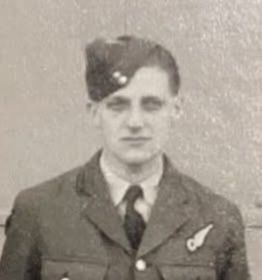 Lawrence Eric Billings
Photo: Courtesy of Paul Markham
Lawrence Eric Billings
Photo: Courtesy of Paul Markham
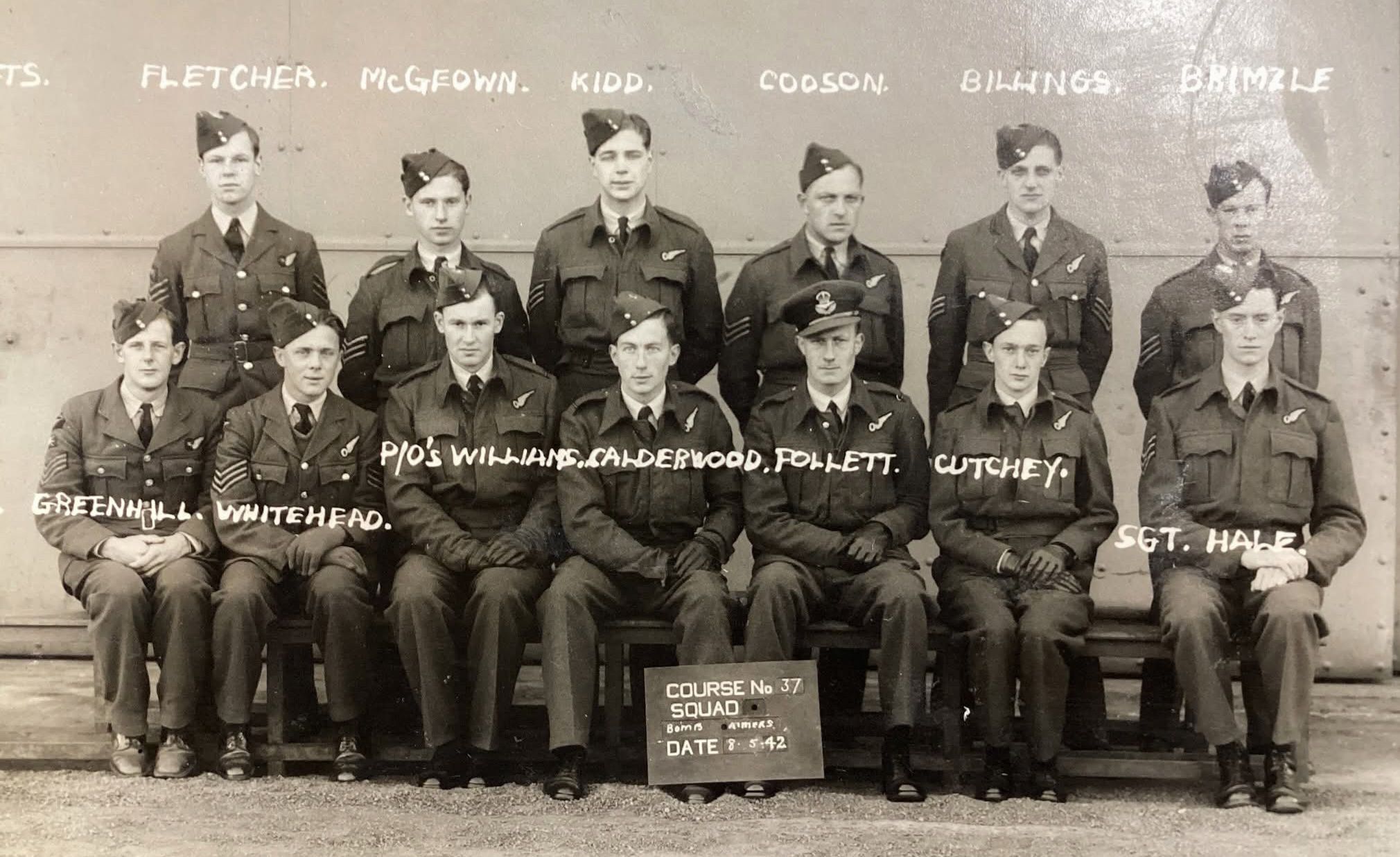 Lawrence Eric Billings
Photo: Courtesy of Paul Markham
Lawrence Eric Billings
Photo: Courtesy of Paul Markham