

John George Cowlishaw
- Family History
- Military history
- Extra information
- Photographs
He was the son of George and Emily Cowlishaw and brother of Noel, Frank and Peggy Cowlishaw. In 1939, John is not listed but the family address is 'Shallufa Cottages', Walesby, Nottinghamshire.
Bombay L5848
Leading Aircraftman M H Winship: killed; Pilot Officer T A Grundy, Sergeant J G Cowlishaw, Leading Aircraftman P D Snowden, Leading Aircraftman T Murray: missing believed killed; failed to return from operational flight over Tobruk.
The Bristol Bombay
The Bristol Bombay was a British troop transport aircraft adaptable for use as a medium bomber flown by the Royal Air Force (RAF) during the Second World War. The Bombay's main service was in the Middle East, particularly with 216 Squadron, which operated most of the Bombays built at some stage When the war with Italy began in June 1940, in the absence of more modern aircraft, 216 Squadron's Bombays were used as night bombers as well as in their principal role as transport aircraft.
The design bomb load of 250 lb (110 kg) bombs under the fuselage was supplemented by improvised bombs thrown out of the cargo door by hand. The aircraft flew bombing sorties against targets in the Western Desert, including Benghazi and Tobruk, and against Italian Somaliland, until the build up of Vickers Wellington bombers in Egypt allowed the Bombays to concentrate on transport operations.
As transports, they ferried supplies and evacuated the wounded during the Siege of Tobruk, and on 2 May 1941, Bombays of 216 Squadron evacuated the Greek Royal Family from Crete to Egypt. Later that month, Bombays played an important role in ferrying troops during the Anglo-Iraqi War. Five Bombays were used by the fledgling Special Air Service (SAS) in their first official operation in the Middle East, a parachute drop on five forward German aerodromes on 17 November 1941.
Bombays evacuated over 2,000 wounded during the Allied invasion of Sicily in 1943, and one crew was credited with carrying 6,000 casualties from Sicily and Italy before the type was finally withdrawn from use in 1944. (Wikipedia)
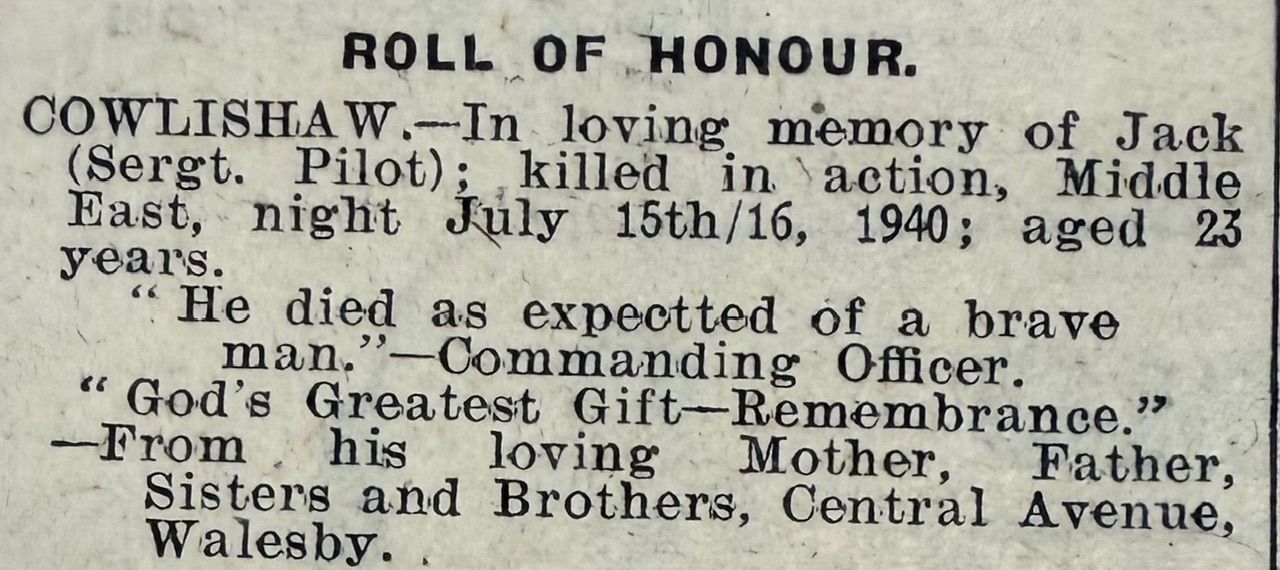 John George Cowlishaw's obituary
Photo: Courtesy of Michael and Elizabeth Szarelis
John George Cowlishaw's obituary
Photo: Courtesy of Michael and Elizabeth Szarelis
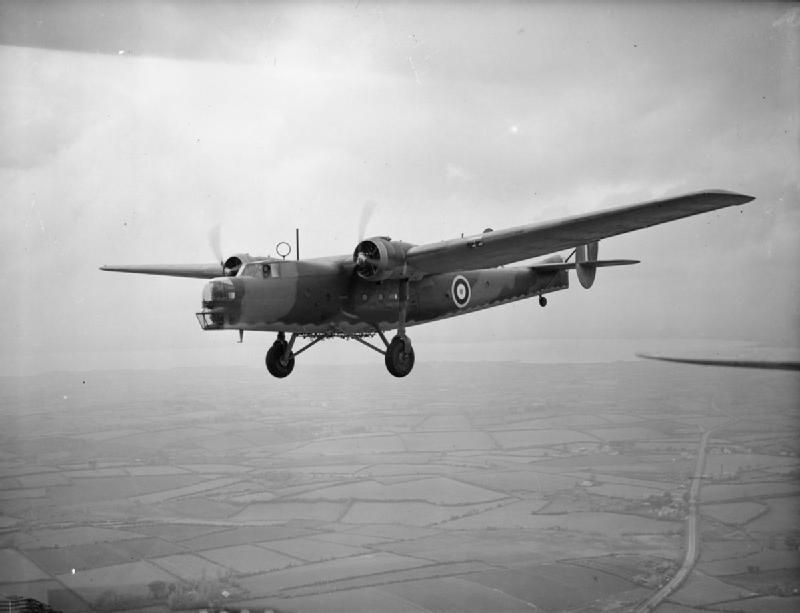 Bombay in flight
Courtesy of Wikipedia
Bombay in flight
Courtesy of Wikipedia